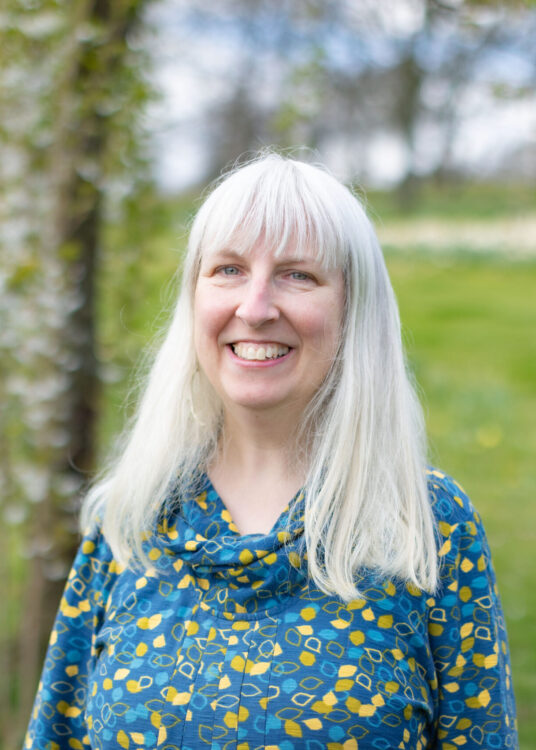
About Corrinna

Thanks for being here.
Hi, I’m Corrinna and my vision is one of nurturing ourselves and our world through reconnecting to our vitality, being grounded and expressing our true nature. I see shiatsu’s natural approach to health and life supporting this vision.
Shiatsu can allow us to tune into life through learning to listen to our body’s messages. It can also help us to be more aware of the interplay with our physical, emotional, mental and social aspects of ourselves.
I discovered how empowering shiatsu can be through a nurse in a community project more than 25 years ago at a particularly stressful and difficult time in my work. I can recall the experience like it was yesterday, feeling like a new person, refreshed and ready to assert myself more and face my work situation again. This change inspired me to follow my intuition 10 years ago to training as a shiatsu practitioner and setting up a community based practice engaging with people from all walks of life.
I am also passionate about creating community. I have been engaged in community development for more than 30 years developing creative wellbeing and advocacy projects with individuals and families experiencing chronic poverty and discrimination. In collaboration with parents and partner organisations, I’ve worked at co-creating conditions where positive change can happen.
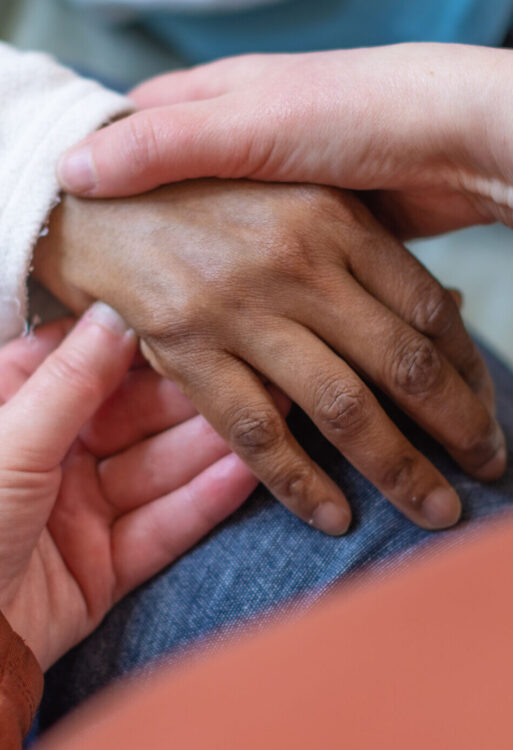
I love working in a variety of settings from individuals, small groups and organisations, it keeps me on my toes! I really like being with different ways of expressing ourselves and being with different cultures, languages and social backgrounds. For me diversity and community really enriches my learning and experience in life.
In daily life, I also feel energised through doing regular qi gong and dance movement practices, singing in a local choir, open water swimming and having playful adventures with my young nieces.
I look forward to hearing from you.
Corrinna Bain
Founder of Rest and Renew, fully qualified shiatsu & acupressure for health & wellbeing practitioner, group facilitator
Training & Qualifications
Click below to find out more about Corrinna’s training and qualifications.
Read More
- MrSS registered and licensed practitioner with Shiatsu Society UK and the Complementary Natural Healthcare Council
- Level 4 diploma in Shiatsu Therapy – 3 year course at Glasgow School of Shiatsu
- Certificate for On-site Seated Shiatsu
- Certificate for Samurai Shiatsu with Children and Seniors
- Certificate in Acupressure for Health and Wellbeing
- Qigong and the Chinese Five Elements immersion training and one year Qigong teacher training with Mimi Kuo-Deemer
- 2 year in person foundation teaching certificate in qigong with Qigongtauk
- Physiology degree BSc, St Andrews University
About Shiatsu
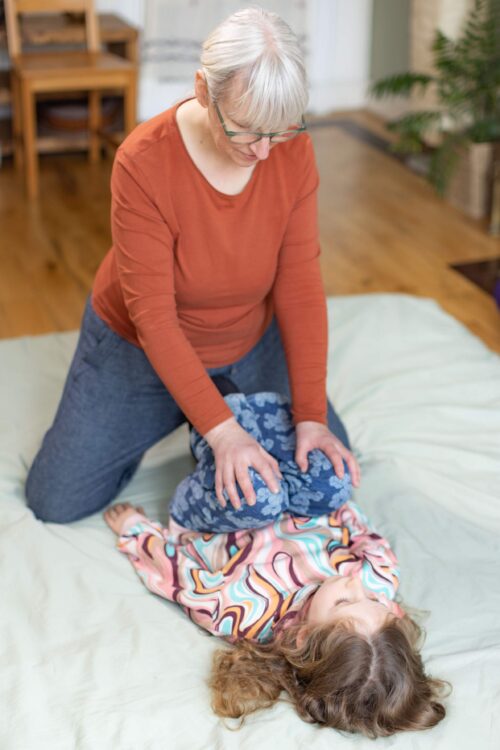
As a holistic bodywork therapy and practice, shiatsu uses mindful touch and movement. It supports the release of stress and tension and strengthens the body’s natural healing and rebalancing response at a physical, emotional and mental level.
Through sensitive connection with the body, using thumbs, palms, hands, elbows, knees and sometimes feet, shiatsu combines applied appropriate pressure, acupressure points, gentle movement and joint mobilisations.
Shiatsu works with our physical systems in our body including the nervous, respiratory and circulatory system. Stimulation can enhance our blood circulation, settle our nervous system and circulate endorphins which are the feel good and pain relieving hormones in our body.
With origins in Japan, Shiatsu literally translated as “finger pressure” (shi – finger, atsu – pressure) is founded on principles of East Asian medicine. It is a popular world wide evolving body-mind therapy and practice with influences through Western medicine and therapies.
To visualise shiatsu, watch this short video here.
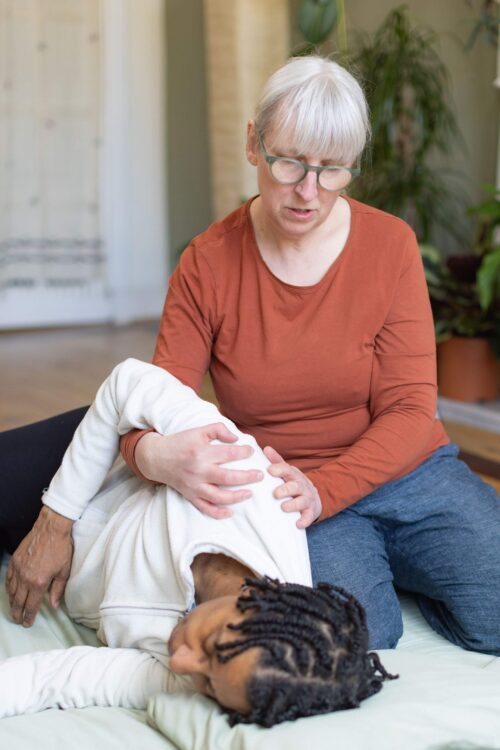
Shiatsu is given through clothes and while traditionally taking place in a clinic on the ground on a padded mat known as a futon for one to one therapy it can be done in a variety of ways and settings such as seated on a chair or in a wheelchair or hospital bed or outdoors.
Research shows that shiatsu is a safe practice supporting people in managing a variety of symptoms and health conditions, enhancing the quality of life.
Shiatsu does not replace medical care. It can work safely alongside it. If you have any health concerns do contact your GP or health specialist.
About Qigong
Qigong supports the natural flow of energy in the body, enhancing vitality, balance and overall wellbeing. It is an embodied practice rooted in ancient Chinese wisdom that brings body, breath and mind together through movement and stillness.
In class, qigong is experienced through slow, fluid, nature-inspired movements that include soft coiling and uncoiling, gentle spirals, rotation through the joints, and wave-like motions through the spine and limbs. These movements through sequences known as forms and postures help cultivate softness, strength, coordination and adaptability, and are guided with relaxed, deep, slow breathing.
Practices in the qigong forms draw on poetic imagery through nature such as Wild Goose Flying, Cloud Hands, Turning to Look at the Moon, Touch the Sea and Look at the Sky, connecting with ease and awareness.
Qigong is a modern term describing a wide range of ancient and contemporary practices drawn from ancient wisdom of Chinese medicine, martial arts, philosophy and science.
All venues are wheelchair accessible. Come as you are, whether you feel fit, tired, stiff or out of shape, no previous experience needed. When coming to class please wear comfortable clothing and shoes that you can move around in easily and a water bottle.
To find out more about the benefits of qigong with regular practice:
click here
- Managing stress & anxiety – gentle movements and breathing calm the nervous system
- Better sleep – helps settle the mind and relax the body for deeper rest
- More energy – improves circulation and natural vitality without strain
- Enhances mobility & joint health – increases flexibility, strengthens joints and can reduce stiffness and aches
- Improved balance – lowers risk of falls as we age
- Stronger bones & posture – gentle weight-bearing movements support bone density
- Better mood & emotional resilience – promotes a sense of calm and well-being
- Improved focus & memory – mindful movement supports brain health
- Heart & blood pressure support – encourages healthy circulation
- Gentle on the body – safe for conditions such as arthritis and limited mobility
Frequently Asked Questions
What can shiatsu help with?
As a deeply relaxing restorative safe therapy working with acute, short term and chronic long term health conditions and life challenges, shiatsu offers support and space for dealing with
- stress, anxiety and depression
- digestive issues
- inflammatory conditions
- pain such as muscle and back pain
- joint mobility issues
- issues with menstrual cycles and the journey through menopause and beyond
- chronic fatigue
As a safe practice, learn more about ongoing research with shiatsu.
Is it safe to receive shiatsu if I am pregnant?
Shiatsu is safe to use during and after pregnancy. If you haven’t had shiatsu or other bodywork before, its advisable to come after the first trimester around 13 weeks. Shiatsu can be supportive for easing common discomforts including fatigue, cramps, back, neck and shoulder tension. A chair, futon or yoga ball is used based on what is needed for your comfort.
Do I have to be ill or have a health condition to have shiatsu?
Simply put no! As a deeply relaxing and revitalising therapy and practice, shiatsu can be effective as part of maintaining your overall health and wellbeing.
Any times when shiatsu needs to be avoided?
Shiatsu is not appropriate as a therapy when you
- have internal bleeding or blood clots
- have had a major operation in the past 3 months
- have a disease which is contagious
- have an acute illness with fever such as the flu
If you are uncertain if shiatsu is appropriate for you please do get in touch.
How do I prepare for the session?
- It’s advisable not to eat a heavy meal at least 2 hours before the session and to avoid drinking alcohol that day.
- Wear or bring socks and comfortable loose long sleeve top and trousers or leggings. Avoid jeans, dresses and skirts or belts.
- Having layers can be helpful for adjusting to your temperature needs.
- Removing jewellery and when possible not wearing strong smelling perfumes, aftershaves or deodorants is also advised as some clients have allergies.
How will I feel after the session?
Sometimes emotional feelings arise and people can sometimes feel sleepy or a bit groggy as the body cleanses, rebalances and the healing benefits unfold. Giving yourself some space and time to rest or be less active can be supportive after a session as well as staying hydrated.
What happens in a session?
We will do a check in about your current health and how you are doing, any changes you notice between sessions and what you would like to focus on in the session. This is followed by the hands on part of the session on a futon or chair based on your requirements usually lasting around 45 minutes. After there will be a short checking out time to begin to let the effects settle and to share easy to use practices or health tips that you can follow up with at home.
The first session will last around 75 minutes, to learn more about your current concerns and health history.
For the 20 and 30 minute shiatsu sessions we go through a brief health form and focus on the hands on part of the session based on needs.
How many sessions will I need?
Everyone’s healing journey is unique and changes will be experienced and influenced by many factors including if your condition is long term and any changes you are making for supporting your health and wellbeing. The number of sessions and their frequency can be explored together in person based on needs. Many people have regular sessions to boost overall health and wellbeing.
Is shiatsu like massage?
Massage and shiatsu are both forms of body work with a variety of styles. In general, massage uses a variety of techniques such as stroking, kneading and rubbing of muscles and soft tissue releasing stress, tension and loosening stiff joints often working directly through contact with the skin.
With origins in Japanese body work and roots in East Asian medicine and influence in Western therapies, Shiatsu works through clothing using static applied sensitive focussed touch, acupressure points, stretches and joint mobilisations. Shiatsu works with activating the body’s natural healing and balancing processes, allowing for a better flow of energy by releasing blockages and strengthening areas where there may be weaknesses.
What style of shiatsu do you do?
Corrinna primarily uses Zen Shiatsu, one of the most popular styles in the West developed by Shizuto Masunaga (1925-1981). Zen shiatsu connects to a person’s present condition through a subtle system of diagnosis, using a stationary and listening hand for greater sensitivity and effectiveness.
To learn more about different styles of shiatsu and the history of Shiatsu, click here.